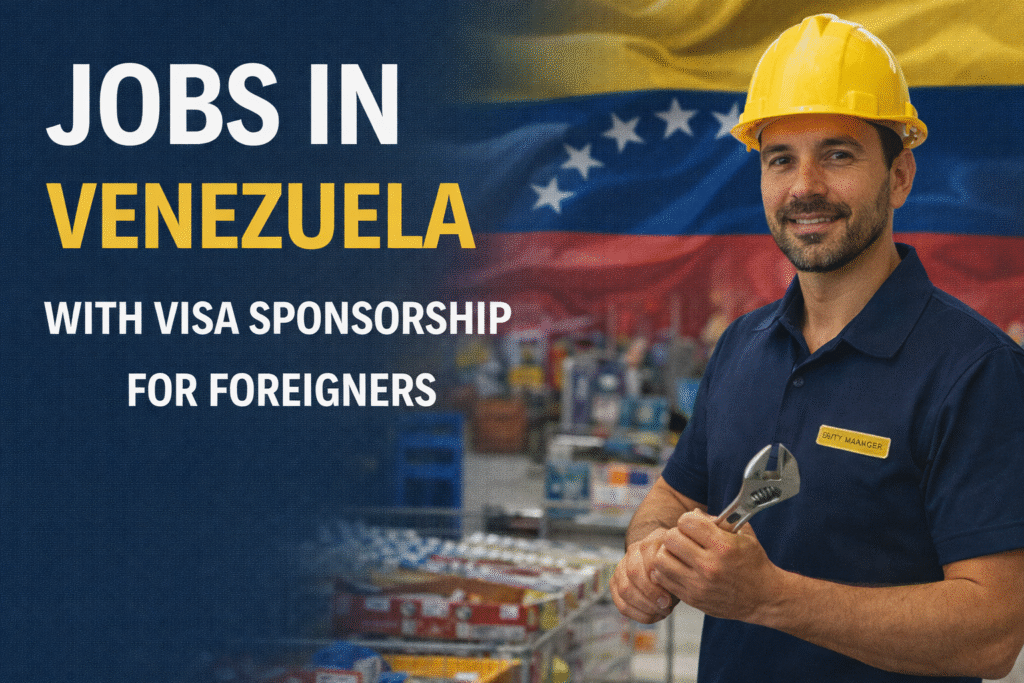
Jobs in Venezuela With Visa Sponsorship For Foreigners
Jobs in Venezuela With Visa Sponsorship For Foreigners
Jobs in Venezuela With Visa Sponsorship For Foreigners The security situation in Venezuela is currently critical. Following the capture of Nicolás Maduro and US military intervention in early January 2026, the country is in a state of severe instability. The US State Department and other nations (UK, Canada, Australia) have issued “Do Not Travel” (Level 4) advisories, urging all citizens to depart immediately. Standard expatriate employment (teaching, corporate roles) is effectively suspended.
Current Reality for Foreign Workers
- Most Sectors are Closed: Schools, general corporations, and non-essential businesses are likely closed or operating in emergency mode. The “digital nomad” or “English teaching” route is currently dangerous and not viable.
- Mass Evacuations: Many international organizations and embassies have reduced staff or evacuated personnel entirely.
- Detention Risk: There are active reports of foreign nationals, including journalists and aid workers, being detained or refused entry.
If you are a specialized crisis professional (humanitarian aid, conflict journalism, high-level energy sector) and are still pursuing entry despite these risks, the following sectors are the only ones with theoretical activity:
1. Oil & Energy Sector (Chevron)123
- Status: Chevron is reported to be the only major U.S. oil company maintaining active operations in Venezuela as of Jan 2026.5
- Potential Roles: Highly specialized engineering, logistics, or security roles. These are not entry-level positions; they require years of experience and usually involve hazard pay and private security details.
- Sponsorship: If hired, the company handles the entire visa process (TR-L Visa) through high-level government channels, but new deployments are likely frozen during the current unrest.
- Where to check: Chevron Careers (Search for “Venezuela” or “Latin America” – largely internal or specialized transfers).
2. International Humanitarian Aid (UN & NGOs)
- Status: The humanitarian situation is dire, with millions in need. However, many agencies have suspended field operations due to safety concerns as of mid-January 2026.
- Potential Roles: Crisis response, logistics, food security, and medical coordination.6
- Organizations:
- UN Agencies: UNICEF, WFP (World Food Programme), OCHA.
- NGOs: Norwegian Refugee Council (NRC), International Rescue Committee (IRC).
- Requirements: These roles require prior experience in conflict zones. You cannot just “apply” for a visa; you must be hired by the HQ, which then negotiates your diplomatic or official visa status.
- Where to check: UN Jobs, Impactpool, ReliefWeb.
3. Conflict Journalism & Security
- Status: High demand but extreme risk. Journalists are currently facing detention and deportation.7
- Roles: Field producers, correspondents, and private security contractors protecting assets/personnel.
- Visa Warning: Entering on a tourist visa to work as a journalist is illegal and highly dangerous right now. You must obtain a specific journalist accreditation/visa before arrival, which is currently difficult to secure.
Visa & Sponsorship Process (TR-L Visa)
In “normal” times, this is the process. Currently, expect indefinite delays or suspensions.
Consulates: Most Venezuelan consulates in Western nations (like the US) are closed or have limited operations. You may need to process paperwork through third countries (e.g., Mexico, Colombia), but borders are currently volatile.
Visa Type: TR-L (Transeúnte Laboral) is the standard work visa.
Sponsorship: Your employer must be in Venezuela and file a petition with the Ministry of Labor (Ministerio del Poder Popular para el Proceso Social de Trabajo).
Requirements for Expat Jobs in Venezuela
If you are hired by an international organization (UN, Chevron, Red Cross) to deploy to Venezuela in 2026, the requirements are rigorous and go beyond standard professional qualifications.
Professional Requirements
- Specialized Experience: Entry-level candidates are rarely sponsored. You generally need 5-10 years of experience in your field (e.g., Petroleum Engineering, Emergency Logistics, Trauma Medicine).
- Conflict Zone Experience: Employers now prioritize candidates who have worked in “Hardship Duty Stations” (e.g., Sudan, Yemen, Syria) due to the current security environment.
- Language Skills: Spanish fluency (B2/C1 level) is essential for safety and operations, even if the office language is English.
Salary Expectations (Crisis Premium)
Because Venezuela is currently a high-risk zone, salaries for foreign specialists are significantly higher than global averages to account for Hardship Pay and Danger Pay.
Note: All salaries for foreigners are paid in USD/EUR into offshore bank accounts. Payment in local Bolívares is not viable due to volatility.
| Role | Estimated Monthly Salary (USD) | Additional Benefits |
|---|---|---|
| UN / Humanitarian Officer | $5,000 – $9,000+ | Tax-free (usually), per diems ($150+/day), R&R breaks (flights home every 8 weeks). |
| Oil & Gas Engineer (Chevron) | $12,000 – $20,000+ | Hazard pay, secure housing in guarded compounds, private armored transport. |
| Crisis Security Advisor | $10,000 – $15,000 | High insurance coverage, completion bonuses. |
The Visa Sponsorship Process (TR-L Visa)
Current Status: The Ministry of Labor is in disarray. Visas are currently being processed through diplomatic channels or emergency decrees rather than standard bureaucratic windows.
The Standard Process (Theory):
- Employer Petition: The company in Venezuela submits a request to the Ministry of Labor indicating they cannot find a Venezuelan for the role.
- Authorization: The Ministry issues a work permit authorization.
- Consulate Interview: You take this authorization to a Venezuelan consulate (likely in a third country like Colombia or Brazil, as many Western consulates are closed) to apply for the TR-L (Transeúnte Laboral) visa.
- Entry & ID: Upon arrival, you must register with SAIME (immigration authority) to get a national ID card (Cédula).
How To Apply
Apply Now
Conclusion
Is it worth it?
- For the average job seeker: No. The risk of detention, violence, or getting stranded is too high. The infrastructure (power, water, internet) is failing.
- For the humanitarian/crisis professional: Yes, but with extreme caution. There is a desperate need for skilled professionals to help stabilize the energy grid and provide food/medical aid. The financial rewards are high, but they come with a “life-risk” premium.
Verdict: Do not attempt to enter Venezuela without a signed contract from a major multinational entity that guarantees your security and evacuation plan.
Frequently Asked Questions (FAQs)
Q: Can I go to Venezuela as a Digital Nomad? A: No. The power grid is unstable, internet is frequently blacked out, and personal safety for foreigners outside of secure compounds is non-existent.
Q: Can I bring my family (spouse/kids)? A: No. Venezuela is currently classified as a “Non-Family Duty Station” by almost all international companies and the UN. You would be deployed solo.
Q: Are there jobs for English speakers who don’t speak Spanish? A: Very few. Even if you work for a US oil company, you need Spanish to navigate checkpoints, deal with local staff, and manage emergencies.
Q: How do I find these jobs? A: Do not use generic job boards like Indeed or LinkedIn Easy Apply. You must go directly to the career portals of organizations operating in conflict zones:
- UN Careers: careers.un.org
- ReliefWeb: reliefweb.int
- Chevron: careers.chevron.com
Q: Is the visa process fast? A: No. Even before the 2026 crisis, it took 3-6 months. Now, it is indefinite unless you are on a diplomatic priority list.