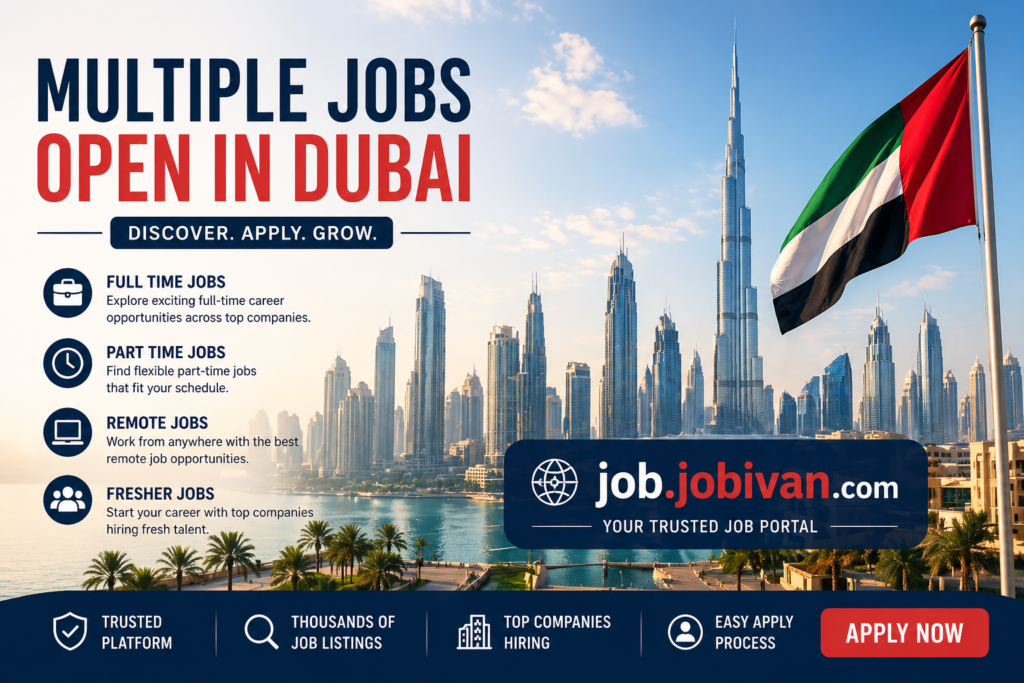
Multiple Jobs in Dubai 2026
Dubai’s job market in 2026 is defined less by single employment pathways and more by a dynamic system of overlapping opportunities. For job seekers, the central question is no longer whether jobs are available, but how to position themselves within a multi-layered labor market that rewards flexibility and specialization. Employment opportunities span technology, construction, finance, logistics, and healthcare, but competition remains intense and hiring standards continue to rise. In the first glance, Dubai appears to offer abundance; in reality, it demands strategy.
The concept of holding multiple jobs has become increasingly common. Professionals are blending freelance work, part-time engagements, and full-time employment to create stable income streams. This is not merely a response to economic pressure but a reflection of a broader transformation in how work is structured. Digital platforms, remote work, and evolving visa policies have made it easier to participate in multiple roles simultaneously.
Dubai’s global appeal continues to attract a diverse workforce, with expatriates forming a significant portion of employees across industries. Yet beneath the opportunity lies a complex system shaped by economic diversification, technological disruption, and shifting employer expectations. Understanding this system is essential for anyone seeking to succeed in Dubai’s labor market in 2026.
The Structural Transformation of Dubai’s Job Market
Dubai’s economy has undergone a significant transformation over the past decade, moving away from reliance on oil revenues toward a diversified model built on services, trade, tourism, and technology. By 2026, this transition has created a layered employment ecosystem where traditional industries coexist with rapidly emerging sectors.
Infrastructure development remains a central driver of job creation. Large-scale projects in transportation, real estate, and urban development continue to generate demand for engineers, project managers, and skilled labor. At the same time, Dubai’s ambition to position itself as a global technology hub has accelerated hiring in digital fields, including artificial intelligence, cybersecurity, and software development.
Financial services also play a crucial role, with Dubai serving as a regional headquarters for multinational corporations. This creates demand for analysts, compliance experts, and financial strategists. The convergence of these industries allows for cross-sector opportunities, enabling professionals to diversify their roles.
This transformation explains why multiple job strategies are gaining traction. Workers are no longer confined to a single industry but can operate across interconnected sectors, creating a more flexible and resilient career structure.
The Rise of Multi-Job Work Culture
In 2026, the idea of maintaining multiple jobs in Dubai reflects a shift in mindset as much as a shift in opportunity. Professionals increasingly view employment as a portfolio rather than a single commitment. This approach allows them to manage financial risk, explore different industries, and accelerate career growth.
Remote work has played a critical role in enabling this trend. Many professionals now work for international companies while residing in Dubai, effectively expanding their income potential. Freelancing platforms and digital marketplaces have further simplified access to short-term and project-based work.
For blue-collar workers, multiple jobs often take the form of additional shifts or side roles, particularly in construction and logistics. These industries continue to experience strong demand due to ongoing infrastructure projects and the growth of e-commerce.
However, this work culture also introduces challenges. Balancing multiple roles can lead to longer working hours and increased stress. It also requires careful navigation of legal and contractual obligations, as not all employment arrangements permit secondary work. Despite these challenges, the multi-job model is becoming a defining feature of Dubai’s labor market.
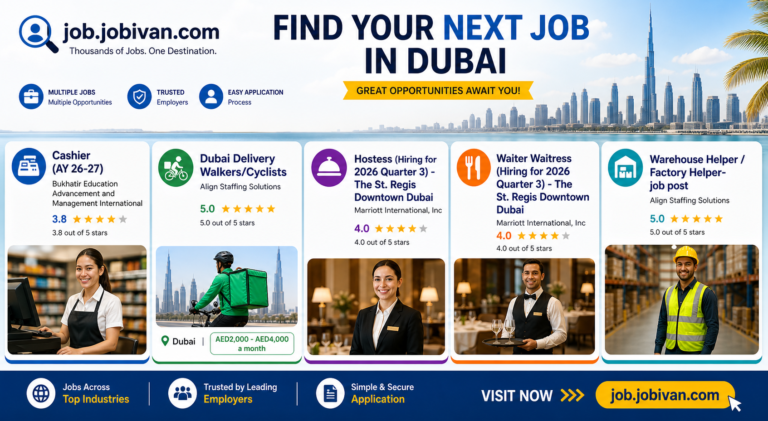
Jobs Information & Companies
SALES EXECUTIVES ( Wadi Al Safa PK LLC )
Multiple VacanciesEmployer Active
Experience
1 – 3 Years
Monthly Salary
AED 2,500 – 5,500 ($676 – $1,486)
Job Location
Dubai, Sharjah – United Arab Emirates (UAE)
Education
Bachelor of Business Administration(Management)
Nationality
Any Nationality
Gender
Any
Benefits
Visa, Medical Insurance, Transportation, Annual Air Ticket
Vacancy
11 Vacancies
WAREHOUSE STAFF ( Wadi Al Safa PK LLC )
Experience
0 – 2 Years
Monthly Salary
AED 2,100 – 4,500 ($568 – $1,216)
Job Location
Dubai – United Arab Emirates (UAE)
Education
Secondary School, Any Graduation
Nationality
Any Nationality
Gender
Any
Benefits
Visa, Transportation, Accomodation, Medical Insurance
Vacancy
10 Vacancies
chief helper ( FYM CATERING SERVICES L.L.C )
Experience
2 – 3 Years
Job Location
Dubai – United Arab Emirates (UAE)
Education
Any Graduation
Nationality
Any Nationality
Gender
Any
Vacancy
3 Vacancies
Cook (Al Abbar Aluminium (Alabbar Investment Co LLC)
Experience
3 – 5 Years
Job Location
Dubai(Jumeirah) – United Arab Emirates (UAE)
Education
Diploma(Hotel Management)
Nationality
Any Nationality
Gender
Any
Vacancy
1 Vacancy
Nanny ( Confidential Company )
Experience
2 – 5 Years
Job Location
Dubai – United Arab Emirates (UAE)
Education
Diploma, Any Graduation
Nationality
Filipino
Gender
Female
Vacancy
10 Vacancy
Apply Now || Apply Now || Apply Now || Apply Now || Apply Now ||
Key Sectors Driving Employment in 2026
Dubai’s job market is anchored by several high-growth sectors that collectively shape employment opportunities.
| Sector | Key Roles | Monthly Salary Range (AED) | Growth Outlook |
|---|---|---|---|
| Technology | Developers, Data Analysts | 12,000–35,000 | Strong |
| Construction | Engineers, Supervisors | 3,500–35,000 | Very Strong |
| Finance | Analysts, Compliance Officers | 15,000–40,000 | Strong |
| Healthcare | Nurses, Specialists | 8,000–30,000 | Growing |
| Logistics | Supply Chain Managers | 6,000–25,000 | Expanding |
Technology stands out as a central driver, influencing nearly every other sector. Financial technology innovations are reshaping banking, while logistics relies heavily on digital systems for efficiency. Construction continues to benefit from government investment in infrastructure, creating steady demand for skilled workers.
Healthcare is also expanding, driven by population growth and increased investment in medical services. Logistics, supported by Dubai’s strategic location as a global trade hub, remains critical to the economy.
The interconnected nature of these sectors allows professionals to explore multiple roles across industries, reinforcing the trend toward diversified employment.
Salary Realities and Cost of Living
While Dubai offers competitive salaries, the financial reality is more nuanced. Salary growth has been moderate, and the cost of living—particularly housing—remains high. This creates a gap that many workers address by pursuing additional income streams.
| Job Level | Average Monthly Salary (AED) | Typical Benefits |
|---|---|---|
| Entry-Level | 3,000–8,000 | Accommodation, Transport |
| Mid-Level | 10,000–20,000 | Health Insurance, Bonuses |
| Senior-Level | 25,000–50,000+ | Housing Allowance, Flights |
For entry-level and mid-level professionals, a single income may not fully meet living expenses. As a result, part-time work or freelancing becomes an essential strategy. Senior professionals, on the other hand, often engage in consulting or advisory roles to enhance their earnings.
A financial expert noted that “primary employment provides stability, but secondary work creates financial mobility.” This dual-income approach reflects a broader shift in how individuals manage their careers and finances in Dubai.
The Role of Government Policies and Visas
Government policies play a crucial role in shaping Dubai’s labor market. Visa reforms have introduced greater flexibility, enabling skilled professionals to work independently or take on multiple roles. Long-term residency options have also made it easier for expatriates to establish stable careers.
Free zones offer additional opportunities, allowing individuals to operate as freelancers or entrepreneurs. These zones provide regulatory frameworks that support flexible work arrangements, making it easier to combine different types of employment.
At the same time, labor regulations continue to evolve to ensure fair treatment of workers. Authorities have introduced measures to regulate working hours, enforce contracts, and protect employee rights.
A regional HR strategist observed that “policy innovation has enabled the rise of flexible work models, making multiple job arrangements more viable.” This balance between flexibility and regulation is central to Dubai’s employment ecosystem.
Challenges Beneath the Opportunity
Despite its opportunities, Dubai’s job market presents significant challenges. Competition is intense, with a large number of applicants competing for limited positions. Employers have become more selective, often prioritizing candidates with specialized skills and local experience.
Networking plays a critical role in securing employment. Many opportunities are filled through referrals rather than traditional applications, making professional connections essential.
Economic uncertainties and global factors can also influence hiring patterns. Companies may adopt cautious recruitment strategies, focusing on essential roles while delaying expansion.
A recruitment analyst noted that “the market rewards precision—candidates must clearly demonstrate their value.” This environment requires job seekers to be proactive, adaptable, and strategic in their approach.
The Skills That Define Success
In Dubai’s 2026 job market, skills have become the primary determinant of success. Employers prioritize practical expertise over formal qualifications, particularly in areas aligned with technological and economic trends.
Key skills in demand include data analysis, artificial intelligence, cybersecurity, project management, and financial expertise. Communication skills and multilingual abilities are also highly valued, reflecting Dubai’s diverse workforce.
Sustainability is emerging as an important area, with increasing demand for professionals in green energy and environmental management. This trend aligns with global efforts to address climate change and promote sustainable development.
A workforce development expert stated that “skills determine access—not just to jobs, but to multiple opportunities simultaneously.” Continuous learning and professional development are therefore essential for long-term success.
Takeaways
- Dubai’s job market in 2026 is shaped by economic diversification and technological growth
- Multiple job strategies are increasingly common across all professional levels
- Key sectors include technology, construction, finance, healthcare, and logistics
- Salary growth is moderate, encouraging professionals to seek additional income streams
- Government policies support flexible and freelance work arrangements
- Competition is intense, requiring specialized skills and strong networks
Conclusion
Dubai’s employment landscape in 2026 reflects both opportunity and complexity. It is a market where jobs are available across multiple sectors, yet success depends on strategic positioning and adaptability. The rise of multiple jobs is not simply a trend—it is a response to the evolving nature of work in a globalized economy.
For many professionals, combining roles offers financial stability and career growth. For others, it introduces challenges related to workload and long-term planning. The ability to navigate these dynamics is essential.
Dubai continues to attract talent from around the world, offering a unique environment where ambition and opportunity intersect. Yet the path to success is no longer straightforward. It requires a willingness to adapt, learn, and engage with a rapidly changing labor market.
In this environment, the future of work is defined not by a single role, but by the ability to manage multiple opportunities effectively.
FAQs
What are the most in-demand jobs in Dubai in 2026?
Technology, finance, construction, healthcare, and logistics are the leading sectors, with strong demand for skilled professionals.
Is it possible to work multiple jobs in Dubai legally?
Yes, depending on visa type and employer permissions, many professionals can engage in freelance or secondary work.
What is the average salary in Dubai?
Mid-level professionals typically earn between AED 10,000 and AED 20,000 per month, depending on experience and industry.
How competitive is the job market in Dubai?
The market is highly competitive, with employers prioritizing specialized skills, experience, and professional networks.
Do employers require UAE experience?
While not always mandatory, many employers prefer candidates familiar with local business practices and work culture.