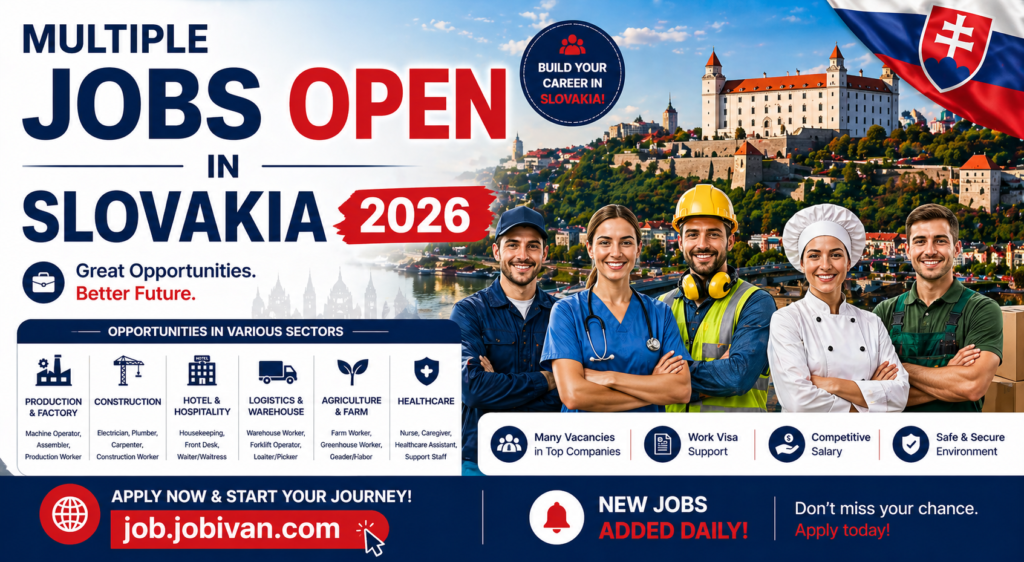
Jobs in Slovakia 2026: Opportunities Guide
Slovakia in 2026 is experiencing a notable surge in job openings across multiple sectors, driven by industrial growth, demographic shifts, and sustained foreign investment. For job seekers—both local and international—the country offers increasing opportunities in manufacturing, logistics, construction, and information technology. Within the first glance, the answer is clear: Slovakia has jobs, and many employers are actively hiring due to a shrinking domestic workforce and expanding economic output.
Over the past decade, Slovakia has transformed into a manufacturing hub in Central Europe, particularly in the automotive sector. However, labor shortages—caused by low unemployment rates and an aging population—have forced companies to look beyond borders. Workers from Ukraine, Serbia, and Asian countries are increasingly filling roles that local labor cannot meet.
Government policies have adapted to this reality, simplifying work permit processes and encouraging foreign employment. At the same time, wages have steadily increased, though still lower than Western European standards. This balance—between opportunity and limitation—defines Slovakia’s job market in 2026. Understanding the sectors, wages, working conditions, and migration pathways is essential for anyone considering employment in the country.
The Economic Landscape Driving Job Growth
Slovakia’s economic structure has long been anchored in export-oriented manufacturing. By 2026, the country remains one of the world’s largest car producers per capita, with major automotive plants driving employment demand. Industrial zones in cities like Bratislava, Žilina, and Nitra continue to expand, attracting suppliers and logistics companies.
The labor market reflects this growth. Unemployment has remained relatively low in recent years, often below 6 percent, creating pressure on employers to fill vacancies quickly. As a result, job openings have increased across both skilled and unskilled categories.
Economists note that Slovakia’s integration into the European Union has played a crucial role. Access to EU markets and funding has supported infrastructure and industrial development. However, it has also led to outward migration, as Slovak workers seek higher wages abroad, further tightening the domestic labor supply.
“The paradox of Slovakia’s success is that economic growth has intensified labor shortages,” notes labor market analyst Katarína Muchová.
Jobs Information & Companies
Warehouse / Supermarket Trading Floor Worker
💰
Salary:
Min €816 / month
📋
Requirements:
Slovak, English
Order collection and execution using scanners, unloading/loading of goods, and maintaining warehouse and trading floor cleanliness.
• Contract: 12 months (renewable)
• Schedule: 10–12 hrs/day + 2–4 hrs overtime, 5.5 days/week (starts 5:30 AM), night shifts available
• Accommodation: Cooperative campus provided (utilities paid by tariff)
• Food: Available for purchase at production cost
• Medical & Insurance: Provided
• Air Ticket: Not provided
Warehouse Worker
💰
Salary:
min €935 / month
📋
Requirements:
Not specified
Work in Nové Zámky region.
• Schedule: Not specified (Overtime: 2-4 hrs/day)
• Accommodation: Provided
• Food: Provided
• Medical: Provided
Delivery Driver (Light Truck)
💰
Salary:
Min €1048 / month
📋
Requirements:
Slovak, English
Delivery of goods to consumers and trading floors using light-duty trucks (up to 3.5 tons), maintaining cargo cleanliness, and handling customs control (CMR).
• Contract: 12 months (renewable)
• Schedule: 10–12 hrs/day + 2–4 hrs overtime, 5.5 days/week (starts 5:30 AM), night shifts available
• Accommodation: Cooperative campus provided (utilities paid by tariff)
• Food: Available for purchase at production cost
• Medical & Insurance: Provided
• Air Ticket: Not provided
warehouse / Supermarket / Production Worker
💰
Salary:
$830-950 USD (paid in local currency)
📋
Requirements:
English, Croatian (optional)
Order collection, scanner work, loading/unloading.
• Schedule: 10-12 hrs/day, 5.5 days/week (starts 6:00 AM)
• Accommodation: Hostel provided (utilities paid by tariff)
• Food: Subsidized (production cost price)
• Ticket: Refunded after 3 months
Production Line Worker
💰
Salary:
min. 22,720 CZK (approx. €920)
📋
Requirements:
English
Work on production line and equipment assembly.
• Schedule: 8-12 hrs/day, 5-6 days/week (235+ hrs/month)
• Accommodation: Hostel provided (utilities paid by tariff)
• Food: Not provided
• Medical: Provided
Key Sectors with Multiple Job Openings
Job opportunities in Slovakia are concentrated in several key sectors, each offering different types of roles and requirements.
| Sector | Common Roles | Demand Level | Average Monthly Salary (€) |
|---|---|---|---|
| Manufacturing | Assembly workers, technicians | Very High | 1,100–1,800 |
| Logistics | Warehouse staff, drivers | High | 1,000–1,600 |
| Construction | Laborers, electricians, engineers | High | 1,200–2,000 |
| IT & Technology | Developers, analysts | Growing | 2,000–4,000 |
| Hospitality | Hotel staff, cooks | Moderate | 900–1,400 |
Manufacturing remains the backbone, particularly in automotive production. Logistics has grown alongside e-commerce and trade, while construction reflects infrastructure investment. The IT sector, though smaller, is expanding rapidly, especially in Bratislava.
These sectors collectively create a diverse job market, accommodating workers with varying skill levels and educational backgrounds.
Wages, Benefits, and Cost of Living
Wages in Slovakia have steadily increased, reflecting economic growth and labor demand. However, they remain lower than in Western Europe, making the country both attractive for employers and challenging for workers seeking higher earnings.
The average monthly salary in 2026 ranges between €1,200 and €1,500, depending on the sector and region. Skilled professionals in IT and engineering earn significantly more, while entry-level positions in hospitality and manufacturing offer lower pay.
Cost of living varies by location. Bratislava, the capital, is the most expensive, with higher housing costs and living expenses. Smaller cities and rural areas offer more affordable living but fewer job opportunities.
“Slovakia’s wage growth is real, but the gap with Western Europe continues to drive outward migration,” says labor economist Martin Kahanec.
Foreign Workers and Migration Policies
Foreign workers play an increasingly important role in Slovakia’s workforce. By 2026, the government has streamlined visa and work permit procedures to attract labor from outside the European Union.
Workers from neighboring countries, particularly Ukraine and Serbia, form a significant portion of the foreign workforce. In recent years, recruitment has expanded to include workers from countries such as the Philippines and India.
| Worker Origin | Common Sectors | Key Advantages | Challenges |
|---|---|---|---|
| Ukraine | Manufacturing, logistics | Geographic proximity | Language barriers |
| Serbia | Construction | Skilled labor availability | Visa limitations |
| Philippines | Hospitality, services | English proficiency | Cultural adjustment |
| India | IT, engineering | Technical expertise | Bureaucratic processes |
While migration policies have become more flexible, challenges remain. Language barriers, cultural differences, and administrative procedures can complicate integration. Nevertheless, foreign workers are now essential to sustaining Slovakia’s economic growth.
Regional Differences in Job Availability
Job opportunities in Slovakia are not evenly distributed. Western regions, particularly around Bratislava, offer the highest concentration of jobs, especially in IT and corporate services. Central and eastern regions, while less developed, have strong demand in manufacturing and construction.
Infrastructure plays a key role in shaping these differences. Areas with better transport links and industrial zones attract more investment and job creation. Conversely, rural regions may face higher unemployment despite national labor shortages.
This regional imbalance influences migration within the country, as workers move toward areas with better opportunities. It also shapes government policy aimed at promoting balanced regional development.
Working Conditions and Labor Rights
Slovakia’s labor laws align with European Union standards, ensuring protections related to wages, working hours, and workplace safety. The standard workweek is typically 40 hours, with regulated overtime.
However, working conditions vary across sectors. Manufacturing jobs often involve shift work and repetitive tasks, while construction work is physically demanding. Office-based roles in IT and services generally offer more flexible environments.
“Ensuring fair conditions for foreign workers remains a priority,” highlights a European labor report, emphasizing ongoing regulatory focus.
Future Outlook for Jobs in Slovakia
Slovakia’s job market is expected to remain dynamic in the coming years. Continued foreign investment, especially in green technologies and digital sectors, is likely to create new employment opportunities.
Automation will reshape certain industries, reducing demand for some manual roles while increasing the need for skilled technicians and engineers.
Demographic challenges, including an aging population, will continue to drive labor shortages, reinforcing the importance of foreign workers. Government policy will play a key role in balancing economic growth with social stability.
Takeaways
- Slovakia’s job market is expanding due to industrial growth and labor shortages
- Manufacturing, logistics, and construction lead in job availability
- Wages are increasing but remain below Western European levels
- Foreign workers are crucial to sustaining economic activity
- Regional differences influence employment opportunities
- Labor protections exist but conditions vary by sector
- Future trends include automation and demographic shifts
Conclusion
Slovakia’s labor market in 2026 reflects a country in transition—growing economically while facing structural workforce challenges. Job opportunities are abundant across multiple sectors, offering pathways for both local and international workers.
However, these opportunities come with complexities. Wage disparities, regional imbalances, and reliance on foreign labor highlight the need for thoughtful policy and sustainable practices.
As industries evolve and new technologies emerge, Slovakia’s ability to adapt will determine its long-term success. Workers will remain at the center of this transformation, shaping the country’s economic future while navigating its opportunities and challenges.
FAQs
What types of jobs are most available in Slovakia in 2026?
Manufacturing, logistics, construction, and IT sectors offer the highest number of job openings.
Can foreigners work in Slovakia easily?
Yes, especially in high-demand sectors, though visa procedures and adaptation may require effort.
What is the average salary in Slovakia?
Average monthly salaries range from €1,200 to €1,500, depending on the job and region.
Is Slovakia a good place to work?
It offers stable jobs and EU labor protections, though wages are lower than in Western Europe.
Do companies provide accommodation?
Some employers provide housing, particularly for foreign workers, but it varies by employer.